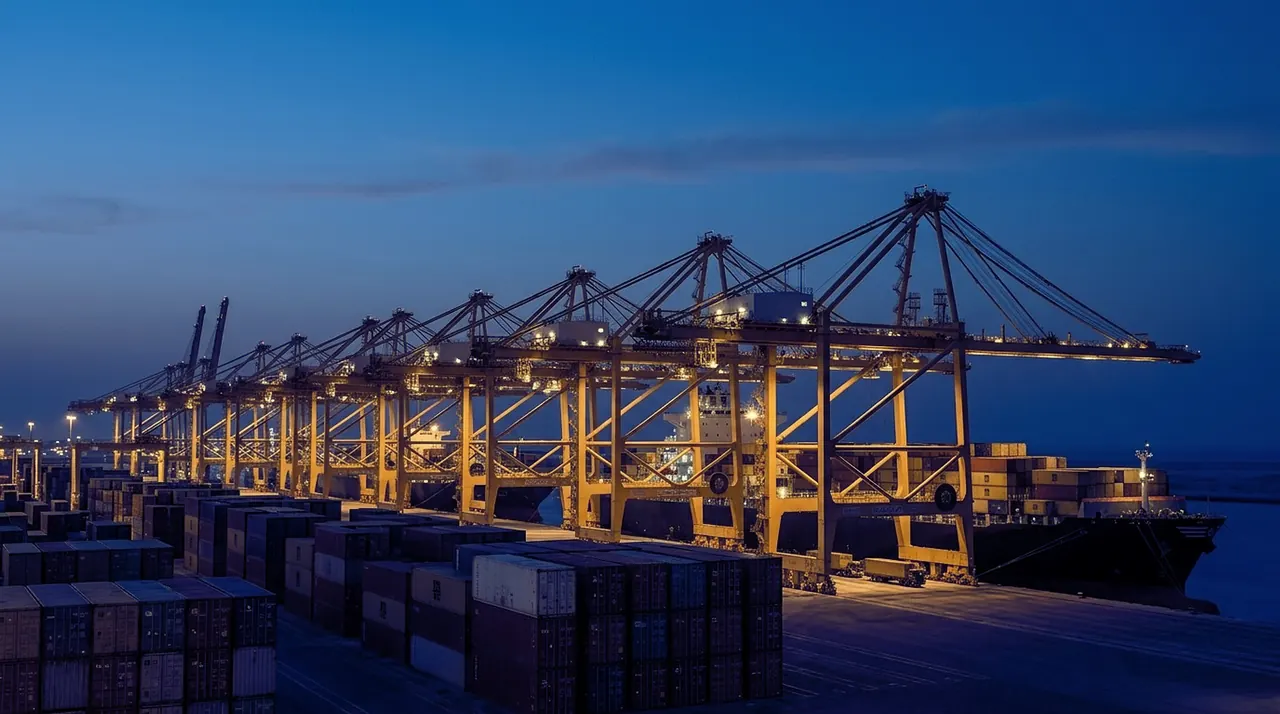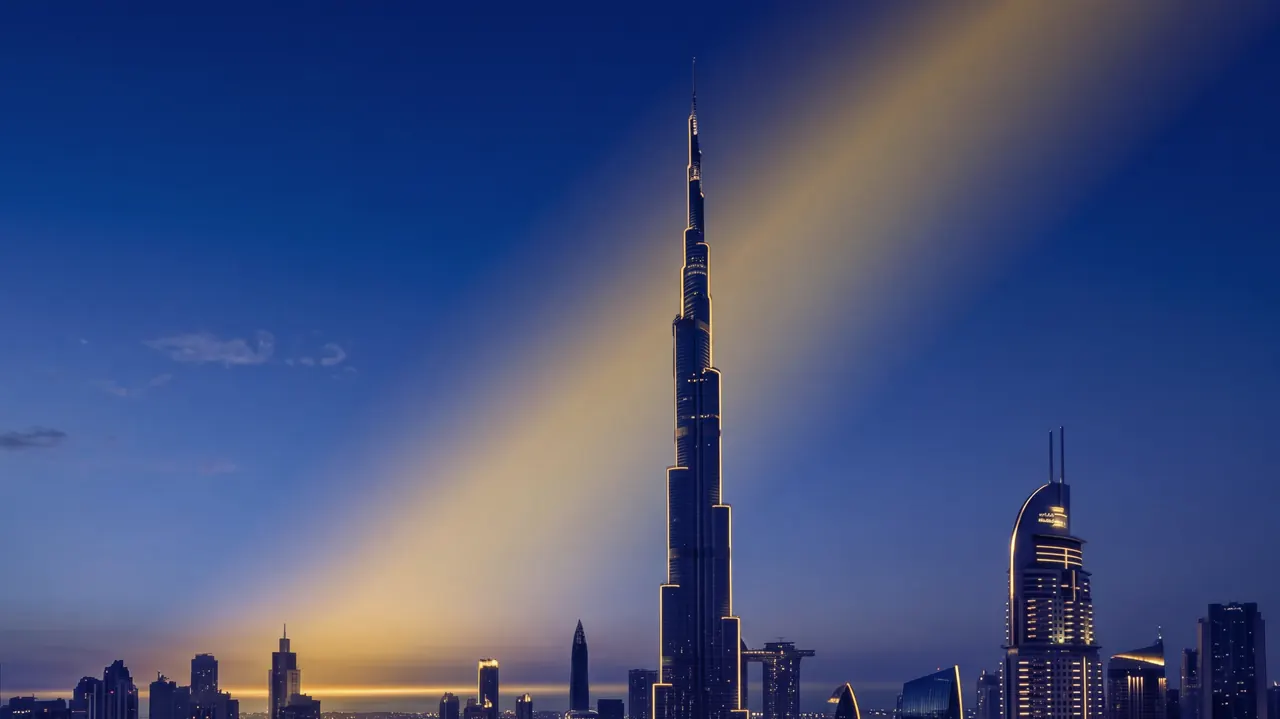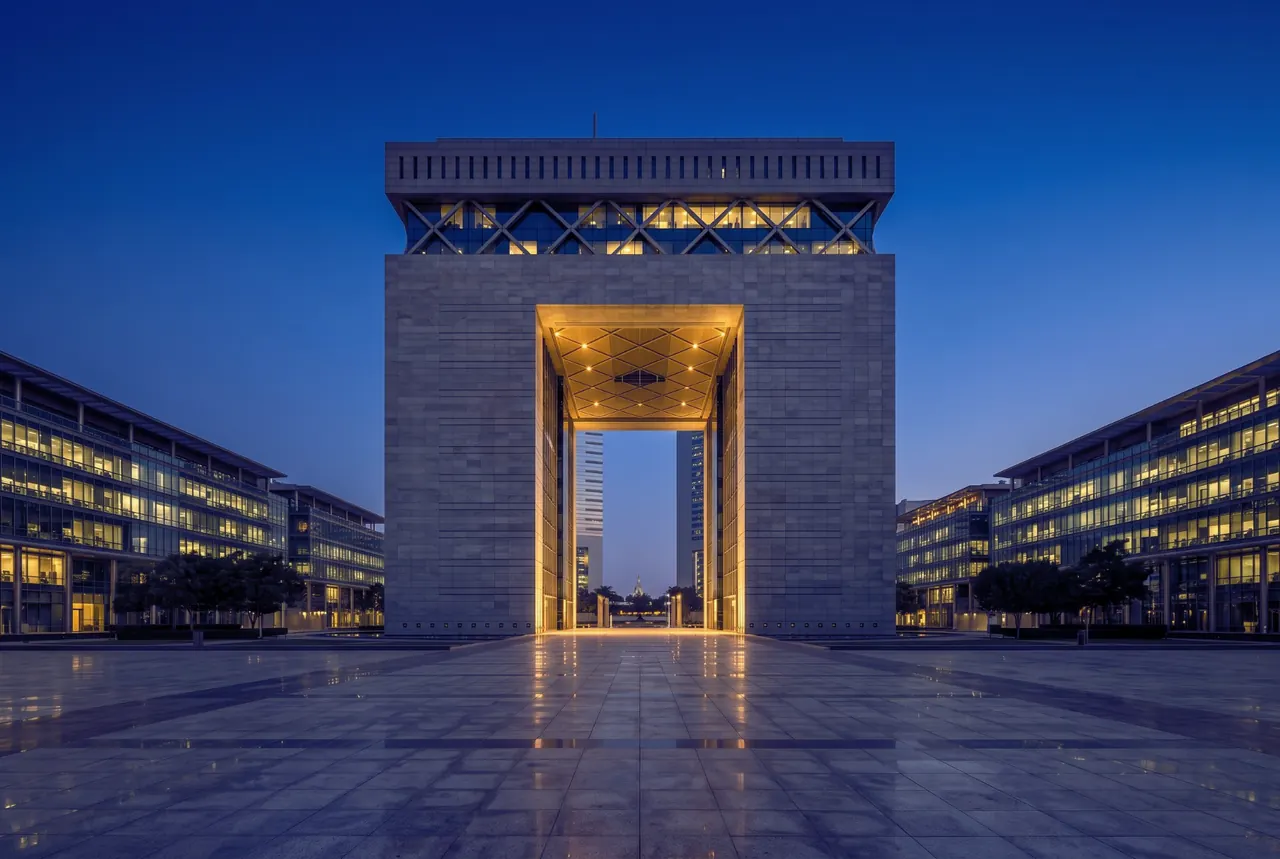

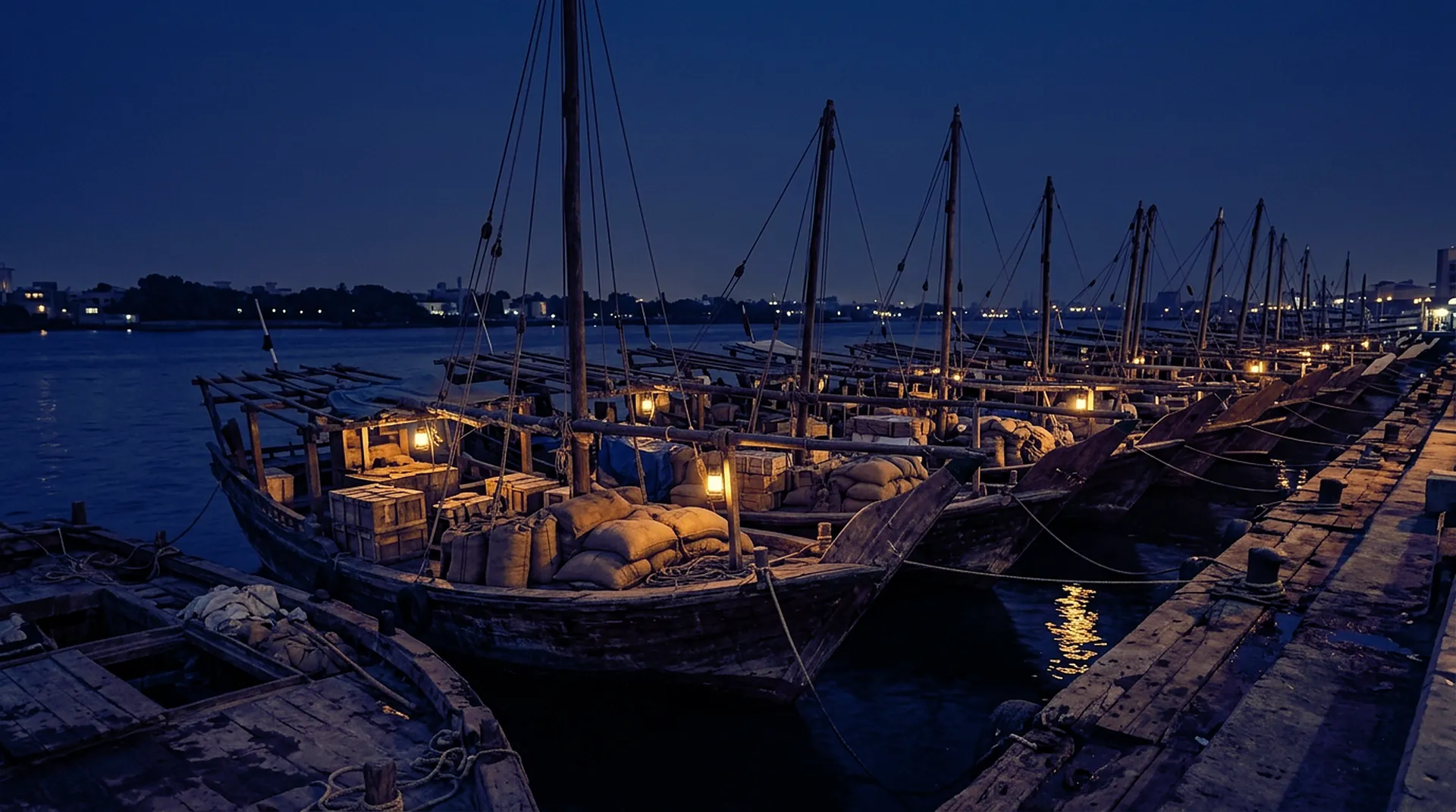
Long before there were container cranes at Jebel Ali, there were dhows. For centuries, wooden ships left the Gulf on the north-east monsoon, bound for Mogadishu, Mombasa and Zanzibar, and came home on the south-west winds carrying mangrove timber, grain and spice. Some still load at Deira Creek today.
The route is old. What is new is its scale. Non-oil trade between the UAE and Africa reached about $158 billion in 2025, up 41.6 percent on the year before, and Africa's share of all UAE non-oil trade rose to 15.5 percent, from 10.8 percent in 2019 (Gulf News, reporting official figures). Between 2019 and 2023, Emirati companies announced $110 billion of new projects on the continent, more than companies from the UK, France or China.
This is the corridor most of our clients already live on. This insight sets out why it matters now, what the headline numbers do and do not say, and the part And Again Advisory intends to play in it.
A corridor, not a headline
A trade corridor is more than two places that happen to buy from each other. It is the whole system that makes trade repeatable: agreements that lower tariffs, ports and airlines that move goods, banks that settle payments, and people on both sides who trust each other enough to sign. Between the UAE and Africa, every one of those layers has thickened in the past five years.
| Measure | Figure | Source |
|---|---|---|
| UAE–Africa non-oil trade, 2025 | About $158 billion, up 41.6% on 2024 | Official UAE figures, via Gulf News |
| Africa's share of UAE non-oil trade | 15.5% in 2025, from 10.8% in 2019 | Official UAE figures, via Gulf News |
| Dubai's non-oil trade with Africa, 2025 | Over $145.9 billion, up 51% | Dubai Chamber of Commerce |
| New UAE investment projects in Africa, 2019 to 2023 | $110 billion announced, $72 billion of it in renewable energy | FT Locations |
| African companies in Dubai Chamber of Commerce | 30,409 active members in 2025, up 14.3% | Dubai Chamber of Commerce |
| Ethiopia's non-oil trade with Dubai, 2025 | AED 22.3 billion (about $6.1 billion), up 236.6% | Dubai Chambers |
What the headline figure really says
Numbers this large deserve a careful reading. A significant part of the UAE's trade with Africa is gold: Africa supplied more than half of all the gold the UAE imported in 2024, according to research by SWISSAID. Take bullion out, and the trade in everyday goods and services, the coffee, sesame, flowers, vehicles, machinery, building materials and consumer goods, is smaller and younger than the total suggests.
We read that as the opportunity, not the caveat. The ports, flights, trade agreements and banking links being built along this corridor are built for far more than gold. The goods and services side of the trade is where small and mid-sized companies fit, and it is the part with the most room left to grow.
The corridor is being built for far more than bullion. The goods, services and people moving along it are where the next decade is.
Four forces driving the corridor now
Trade agreements are turning goodwill into rules
Since 2021 the UAE has concluded 38 Comprehensive Economic Partnership Agreements (CEPAs), 18 of them now in force, and Africa has become part of that programme. Mauritius was the first African CEPA to enter into force, on 1 April 2025. Kenya signed in January 2025, the Central African Republic in March and the Republic of the Congo in April, and the Democratic Republic of the Congo followed in 2026. Each agreement cuts or removes tariffs on most traded goods and sets clearer terms for services and investment.
Ports and logistics are being built on both shores
Emirati operators now run or are building terminals along much of Africa's coastline. DP World's portfolio includes Berbera in Somaliland, Dar es Salaam in Tanzania under a 30-year concession, Dakar and the new deep-water port at Ndayane in Senegal, Maputo, Luanda, Banana in the Democratic Republic of the Congo and Sokhna in Egypt. In 2024 the company announced plans to invest $3 billion in African ports and logistics by 2029. For a trader, this means the same family of operators can increasingly handle a container at both ends of its journey, from an African quay to Jebel Ali and on to Asia.
Capital is flowing south
The $110 billion of new projects UAE companies announced across Africa between 2019 and 2023 included $72 billion in renewable energy, according to FT Locations data, and put the UAE ahead of the UK, France and China as a source of new, greenfield investment on the continent. Investment on this scale creates demand around it: for suppliers, contractors, service firms and traders on both sides.
The people and the connections are already there
Addis Ababa and Nairobi are four to five hours from Dubai by air; Lagos and Johannesburg about eight. Emirates alone runs more than 160 flights a week between Africa and Dubai. By the end of 2025, 30,409 African companies were active members of Dubai Chamber of Commerce, up 14.3 percent in a year, and 1,676 Ethiopian firms were members by the first quarter of 2026. Behind those numbers are founders who already treat Dubai as their second base.
Why the UAE sits in the middle
Africa is building its own single market: the African Continental Free Trade Area is designed to connect some 1.4 billion people across the continent. Asia remains the workshop of the world. The UAE sits between the two, with the ports, airlines, banks and legal certainty to connect them.
For an African company, a UAE base is often the simplest way to buy from Asian suppliers, sell to Gulf customers, hold stock for re-export, and invoice and be paid in a stable, convertible currency. That is why many of the companies we form are not Dubai businesses in the usual sense. They are African businesses with a Dubai arm: an exporter's sales office, a trader's procurement desk, a tour operator's Gulf office, a family's holding company.
Who the corridor is really for
- The exporter in Addis Ababa or Nairobi who wants to sell roasted, branded coffee or packaged sesame directly to UAE buyers instead of through intermediaries. Our guide for Ethiopian exporters goes deeper.
- The trader in Lagos, Accra or Kampala who needs a stable place to buy from Asian suppliers, hold stock and settle payments.
- The service founder in tourism, consulting, media or technology who wants Gulf clients, UAE residence and a company a bank will read comfortably.
- The family business that wants a holding structure and a second base beyond a single home market.
- The Gulf company looking south, which needs partners who understand how business is actually done in African markets.
What still gets in the way
The corridor is open, but it is not frictionless. Most of the problems we see are not about ambition. They are about structure.
None of these is a reason to wait. Each is a reason to set up properly. Our guides to opening a corporate bank account and first-year compliance cover the detail.
The part we want to play
And Again Advisory was built on this corridor. We are a Dubai firm, registered in Meydan Free Zone, and most of the founders we work with come from Ethiopia and across Africa. We work with them in English and Amharic, from the first conversation to an operating company.
Our ambition is simple to state: to be the Dubai desk for African business. The firm on the UAE end of the corridor that makes it usable for companies too small for an investment bank and too serious for a licence shop. In practice, that means six commitments.
- Structure before paperwork. We start with the business model, then choose Free Zone or Mainland, the zone and the activities that fit how you actually trade, whether that is import, re-export, foodstuff or services.
- Companies that work, not just licences. Visas, Emirates ID, a corporate bank account, corporate tax and VAT registration, coordinated so the company can trade from its first month.
- Doors, not just documents. Introductions to buyers, distributors and partners in the UAE, and a practical calendar of the UAE trade shows where African companies can meet them.
- Clear information, every week. Our UAE Business Pulse tracks the rules, deals and numbers that matter to founders on the corridor, and the AAA Podcast lets founders who have made the move tell it in their own words.
- Growing with the agreements. As the CEPAs with Kenya, the two Congos and others come into force, we intend to build the same depth for founders from those markets that we have built for Ethiopian founders.
- Both directions, in time. We want to work the corridor both ways, helping UAE companies looking south to find partners in the African markets we know.
One small example of the corridor at work. In June 2026 we formed Senait Global, a Meydan Free Zone company running tours and events for travellers between Ethiopia and the Gulf: three licensed activities, fully foreign owned, registered for corporate tax from its first period, with renewals tracked through 2027. Multiply that by thousands of founders and you have the corridor as it really is. Not one headline deal, but many well-built companies.
Final thought: take your place on the corridor
The UAE–Africa corridor does not need another headline. The agreements are being signed, the ports are being built and the capital is already moving. What it needs now is companies that are set up properly on both ends, and founders who can use it with confidence.
That is the work we want to do. If your business lives between Africa and the Gulf, or you want it to, we would like to help you take your place on the corridor.