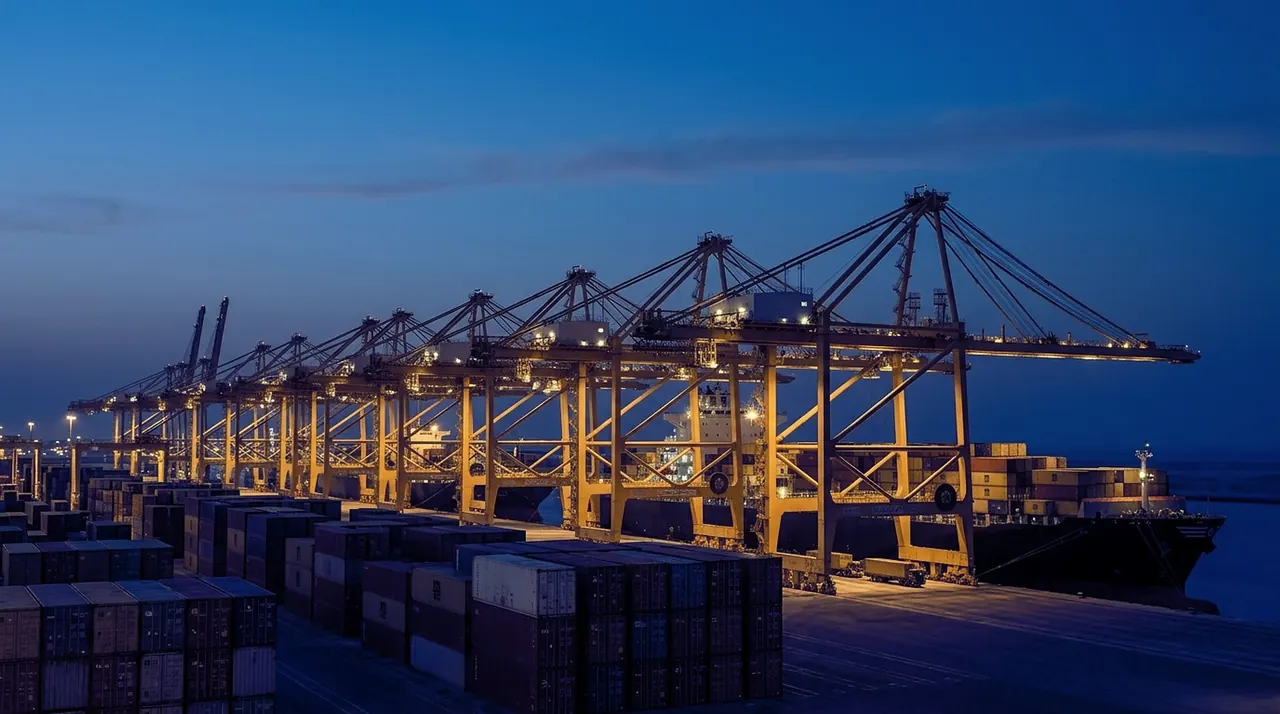


A trader in Addis Ababa, Nairobi or Lagos can buy directly from a factory in China, India or Turkey. Many still choose to buy through Dubai. They land goods in a free zone, hold them without paying duty, break containers into smaller lots, and ship on to buyers across Africa when the orders and the payments are ready.
The numbers show how established this model is. UAE re-exports reached AED 830.2 billion in 2025, up 15.7 percent on 2024, according to the Ministry of Foreign Trade. Dubai's non-oil trade with Africa passed $145.9 billion in the same year, up 51 percent, as reported by the Dubai Chamber of Commerce.
This guide sets out when a Dubai hub makes sense and when shipping direct is better. It covers duty-suspended storage, the ports and airports that make the model work and how 2026 has changed them, certificates of origin, payment terms, and the import rules you must research in each African destination.
Ship direct or hub via Dubai
Shipping direct is simpler when you have one supplier, one buyer and full containers. A hub earns its place when the trade is more complicated: many suppliers, many buyers, small orders, or buyers who pay late or in a currency your supplier will not accept.
| Question | Ship direct | Hub via Dubai |
|---|---|---|
| Best suited to | One supplier, one buyer, full container loads | Several suppliers, several buyers or markets, mixed or smaller orders |
| Stock position | Goods travel straight to the buyer, no stock held in between | Stock held in a free zone or customs warehouse with duty suspended, released as orders arrive |
| Consolidation | Limited to what each supplier ships | Goods from different origins combined or split into lots for each buyer |
| Contracts and payment | Between the supplier and the African buyer | Your UAE company buys and sells, invoicing and receiving payment through a UAE bank account |
| Documents | Supplier's invoice and certificate of origin | Re-export documents issued in Dubai, including a certificate of origin for foreign goods |
| Destination inspection | Arranged in the supplier's country | Often arranged in the UAE, as the country the goods ship from |
| Transit time | Usually shorter for a single full container | Longer end to end, but faster to the buyer when stock is already in Dubai |
| Main risk | Less control over timing and mixed orders | Extra handling and storage, and exposure to Gulf routing disruption in 2026 |
Many traders run both. Full containers for a large buyer go direct, and everything else flows through the hub.
Holding stock without paying duty
The core of the model is duty suspension. Under Dubai Customs rules, duty is suspended on goods that are in transit, deposited in customs warehouses, admitted into free zones, or imported for re-export. As long as the goods leave the UAE, the 5 percent GCC customs duty that applies to imports into the local market is not charged.
There are three common ways to hold stock:
- A free zone company with its own warehouse or storage. Zones such as Jafza, next to Jebel Ali Port, are built for this. The company can store, repack and re-export without customs duty.
- A customs warehouse. Dubai Customs licenses private warehouses for an importer's own goods and public warehouses run by operators for many clients. Duty is deferred until the goods leave for the local market or for export.
- Import for re-export. A declaration type that lets goods enter and leave again without duty, with the exit documented.
Two cautions. First, anything sold into the UAE mainland from the free zone pays duty at that point. Second, the paperwork must close the loop: customs expects proof that goods declared for re-export actually left. The 12-digit tariff structure also reaches re-export movements from February 2027, according to the Dubai Customs roadmap, so classify goods carefully from the start.
Ports, air hubs and what changed in 2026
In normal times, Jebel Ali is the Middle East's largest port, and Jafza offers a single customs-bonded logistics corridor between the port and Al Maktoum International Airport, which Jafza says cuts sea-to-air transfer to under an hour. Goods can arrive by sea from Asia and leave by air for an African capital without clearing into the UAE.
2026 has not been normal. Since the regional conflict began at the end of February, container traffic through the Strait of Hormuz has been severely disrupted. Semafor reported that Jebel Ali's container volumes in the second quarter were about 90 percent lower than a year earlier. Cargo has shifted to the UAE's east coast. The National reported that weekly volumes at Khor Fakkan rose from about 8,000 to 65,000 containers (TEU), and AD Ports Group has set up overland routes from Fujairah and Khor Fakkan, under bonded customs transit, to Khalifa Port, Jebel Ali and Sharjah, as Gulf News reported.
Air freight has recovered faster. Dubai Airports said in September 2026 that airline capacity at DXB was back to 84 percent of previous levels, according to Gulf News. For a hub trader, the lesson is practical. The model still works, but routing, transit times and insurance must be checked shipment by shipment.
A Dubai hub is not a shortcut around paperwork. It is a way to hold stock, choose your moment and sell to many markets from one well-run company.
Certificates of origin and the paperwork buyers need
African customs authorities want to know where goods were made. When goods leave Dubai, the Dubai Chamber of Commerce issues certificates of origin for exports and re-exports to its members. The main document is the commercial invoice, and for goods passing through Dubai the Chamber asks for the Dubai Customs transit or exit document. Goods of UAE origin need the manufacturer's industrial licence and factory invoice.
A re-export certificate records the true origin. Chinese goods remain Chinese goods when they leave Dubai, so any tariff preference in the destination depends on the agreements that country has with the country of manufacture, not with the UAE. Ask the buyer or their clearing agent which documents their customs expects, and in what form, before you ship.
Getting paid: letters of credit and payment terms
Payment risk is often the reason traders use a hub at all. A UAE company can hold a corporate account in a convertible currency, receive payment from buyers in several countries, and pay suppliers on terms they accept. The usual options, from safest to riskiest for the seller:
- Advance payment. Common for first orders and small buyers.
- Letter of credit. The buyer's bank undertakes to pay against compliant documents. Letters of credit are commonly issued subject to the International Chamber of Commerce's UCP 600 rules, in force since 2007. Documents must match the credit exactly, so the invoice, bill of lading and certificate of origin need to be prepared with the credit terms in hand.
- Documentary collection. Banks exchange documents for payment or acceptance, without a bank guarantee.
- Open account. Goods first, payment later. Workable with long-standing buyers, and safer with credit insurance.
Etihad Credit Insurance, the UAE's federal export credit company, supports exports and re-exports and has a reinsurance partnership with the African Trade Insurance Agency. Your bank and a licensed adviser can help you choose the right instrument. Our guide to opening a corporate bank account explains what banks look for in a trading company.
Destination rules: research before you ship
The import rules that matter most are in the buyer's country, and several African markets require goods to be inspected before they leave the exporting country.
- Kenya. The Kenya Bureau of Standards runs the Pre-Export Verification of Conformity (PVoC) programme. Inspection takes place in the country of supply, and the UAE is a covered country. KEBS renewed the programme for 2026 to 2029.
- Uganda and Tanzania. The Uganda National Bureau of Standards runs a Pre-Export Verification of Conformity programme, and the Tanzania Bureau of Standards a Pre-Shipment Verification of Conformity programme, both for regulated products.
- Nigeria. The Standards Organisation of Nigeria runs SONCAP, which requires a product certificate and a shipment certificate for regulated products.
How And Again Advisory helps
We are a Dubai advisory firm registered in Meydan Free Zone, built for Ethiopian and African founders, and we work in English and Amharic. For a hub trader, our job is to get the structure right: the free zone or mainland route, trading and re-export activities that match the goods, and a setup that runs through visas, Emirates ID, a corporate bank account and compliance registrations. Most of our clients are registered within two to three weeks.
We coordinate authorities and licensed partners, and we introduce clients to buyers and partners in the UAE. Our UAE trade shows calendar lists the fairs where African traders meet suppliers and customers. We do not give legal, tax or investment advice. For the cost of a setup, use our cost estimator, or read our wider view of the UAE–Africa trade corridor.
Final thought: a hub is a discipline, not a detour
Dubai works as a trading hub for Africa because it lets a small company behave like a larger one: buy well, hold stock, sell to many markets and get paid in a stable currency. 2026 has shown that the routes can change quickly, and the paperwork never relaxes. Set up the company properly, know each destination's rules, and the hub will earn its place in your trade.