

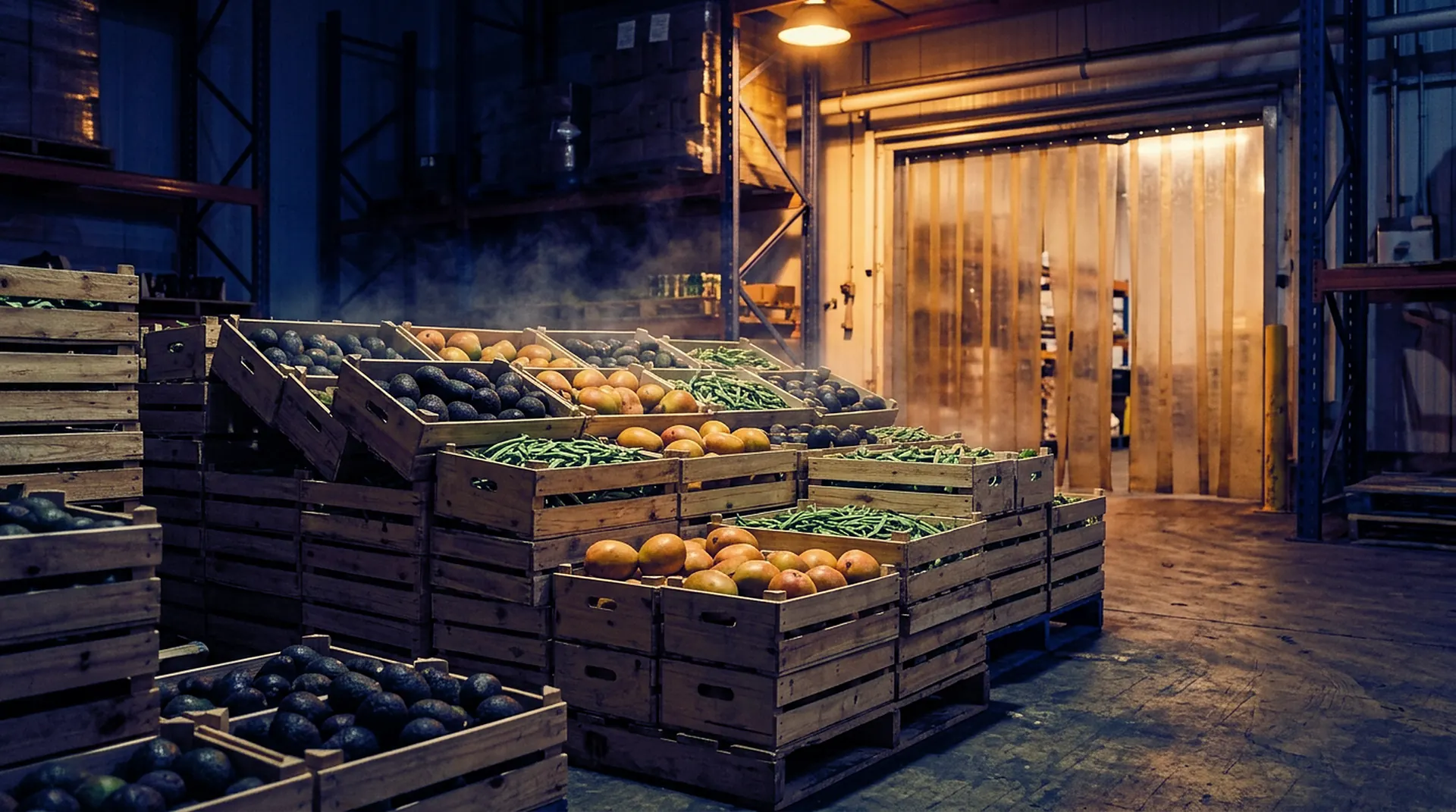
A coffee roaster in Addis Ababa, a honey producer in the Ethiopian highlands or a spice blender in Nairobi can find a willing buyer in Dubai in a week. Getting the product onto a UAE shelf takes longer. Before a food item is sold, it has to be registered, its label assessed, its dates checked, and in many cases its halal status certified.
These steps are not obstacles designed to keep African producers out. They are the same rules every supplier meets, from Europe to Asia. Producers who plan for them from the first carton move quickly. Producers who discover them at the port pay for storage, relabelling and sometimes the return trip.
We have written separately about why the UAE is Ethiopian exporters' natural market and where the value lies. This piece is the practical companion: who imports, how registration and label assessment work, what an Arabic label must carry, shelf life, halal certification and cold chain, with a checklist to take to your first shipment.
Who imports: an importer of record or your own UAE company
Food registration in the UAE is done by a UAE importer, not by the overseas producer. According to the USDA's country report on UAE food import rules, the importer applies for registration and label assessment, receives the registration, then applies for import permits for each consignment. That leaves an African producer two routes.
- Work through an importer of record. A licensed UAE food importer or distributor registers your products and clears your shipments. This is the fastest way to test the market, but the registrations sit in the importer's name, and so does much of the customer relationship.
- Set up your own UAE company. A company licensed for foodstuff trading, with its own customs code, holds the registrations itself. It takes more work at the start, but it gives you control of pricing, distributors and the brand.
Many producers start with an importer and move to their own company once volumes justify it. Either way, the licence must cover foodstuff trading for the exact product categories. Our guide to Free Zone vs Mainland explains how the choice of jurisdiction affects selling to UAE retailers.
Product registration and label assessment
Every food item sold in the UAE must be registered before it is handled in the market. The federal ZAD system, developed by the Ministry of Climate Change and Environment with Dubai Municipality and in operation since 2018, holds registered food products for all seven emirates. It covers food that is imported for sale or re-export, as well as food made in the UAE.
In Dubai, registration and label assessment run through Dubai Municipality. Its services include applying to register and assess a food item and applying to release imported food consignments for sale in the local market. In February 2025 the Municipality launched Montaji+, a food product platform that lets companies register products by uploading an image, with artificial intelligence completing the form, as Khaleej Times reported. The federal database and the emirate services work side by side, and outside Dubai label assessment is handled by each emirate's food control authority, so your importer should confirm the exact route for each emirate you will sell in.
Three rules from the registration process catch new exporters:
- Each pack size is a separate item. A 250 gram and a 500 gram bag of the same coffee are registered separately.
- Any change needs re-assessment. A new weight, barcode, pack or label design means a new label assessment.
- First imports may be tested. Dubai Municipality tests food items registering for the first time, based on risk. An ingredient or additive found in the product but missing from the label leads to rejection.
Arabic labelling, dates and shelf life
What the label must carry
UAE labelling follows the Gulf standard for prepackaged food, known as GSO 9 and adopted in the UAE. Mandatory information must appear in Arabic. English or other languages may appear alongside, but the content must match the Arabic exactly. A compliant label typically shows the product name, ingredients in descending order, additives and any mandatory warnings, the nutrition declaration, net quantity, the manufacturer or packer's name and address, the country of origin, storage conditions, a batch number, and production and expiry dates.
Arabic stickers over an English pack are allowed, but the USDA summary of UAE rules sets out the conditions: the sticker must be approved during label assessment, applied before export as a single sticker, must not hide required information, and must not contradict the original label. Production and expiry dates cannot live only on the sticker. They must be printed, embossed or stamped on the original pack.
Shelf life and date formats
Shelf life is governed by the UAE standards on expiration dates, UAE.S 150-1 for products with mandatory expiry periods and UAE.S 150-2 for voluntary ones. Check which part covers your product and what maximum period it allows. For products with a shelf life of three months or less, dates are shown as day, month and year. Longer-life products may use month and year.
Shelf life is also commercial. UAE retailers and distributors want enough life left on arrival to sell through their chain, so allow for transit, clearance and warehouse time when you set production runs.
The label is the product's passport. If it is wrong in Arabic, nothing else about the product will get it onto the shelf.
Halal certification
Halal is not required for every food, but it is essential for meat, poultry and any product containing animal-derived ingredients, and any product that claims to be halal must be able to prove it. The Ministry of Industry and Advanced Technology runs the UAE halal system under Cabinet Decree 10/2014. Its core rules for exporters:
- Use a registered certifier. Halal certificates must come from certification bodies registered by the Ministry, which keeps a list of approved bodies.
- Know the standards. UAE.S 2055-1 sets general requirements for halal food, and UAE.S 993 covers slaughter according to Islamic rules.
- Meat needs more. Meat and meat products need an original halal slaughter certificate, and animal products must come from facilities approved for export to the UAE.
- One halal mark. The UAE national halal mark is voluntary, but if a halal logo appears on the pack, it must be the UAE's.
Before you pay for certification at home, confirm that your certifier appears on the Ministry's current list.
Cold chain and getting the goods there
Fresh produce, meat, dairy, flowers and chilled ready meals live or die on temperature. Plan the chain end to end: pre-cooling at origin, the airline or shipping line's reefer capacity, handling at the UAE airport or port, bonded cold storage while the consignment is inspected, and refrigerated delivery to the customer. State the storage conditions on the label, because the label assessment checks them.
For many perishables, air freight is the practical choice. Sea freight has been harder in 2026. Since late February, shipping through the Strait of Hormuz has been severely disrupted, and much sea cargo for the UAE now arrives on the east coast at Khor Fakkan and Fujairah and moves inland under bonded customs transit, as Gulf News reported. For reefer containers, confirm the route, transit time and power supply along the way before you commit.
Animal products and some plant products also need health or phytosanitary certificates from the competent authority at origin, and certain goods need a permit from the Ministry of Climate Change and Environment. Your importer or customs broker will match the permit to the product's tariff code.
A pre-shipment checklist for food exporters
Use this list before the first carton leaves the factory.
- Importer of record chosen, or own UAE company licensed for foodstuff trading
- Customs code in place for the importing company
- Each product and pack size registered, with label assessment approved
- Arabic label or approved sticker, matching the original label exactly
- Production and expiry dates printed on the original pack in the correct format
- Shelf life checked against UAE.S 150-1 or 150-2, with enough life left on arrival
- Halal certificate from a Ministry-registered body, where relevant
- Health or phytosanitary certificates and any import permits arranged
- Cold chain booked end to end, with the 2026 sea route confirmed
- First buyer, payment terms and delivery terms agreed in writing
How And Again Advisory helps
We are a Dubai advisory firm registered in Meydan Free Zone, built for Ethiopian and African founders, and we work in English and Amharic. When a producer decides to hold its own registrations, we structure and set up the UAE company with foodstuff trading activities that match the products, and take it through activation: visas, Emirates ID, a corporate bank account and compliance registrations. Most of our clients are registered within two to three weeks.
We coordinate authorities and licensed partners, such as customs brokers, and we introduce clients to buyers and distributors in the UAE. Our UAE trade shows calendar includes the food fairs where buyers meet new suppliers. We do not issue registrations or halal certificates ourselves. For setup costs, see our cost estimator.
Final thought: compliance is part of the product
African food has a real market in the UAE. What separates the producers who build on it from those who make one sale is rarely the product itself. It is a correct Arabic label, a registration in the right name, a certificate from the right body and a cold chain that holds. Treat compliance as part of the product, and the market is there to be won.